The miles that keep me going
I thought I was healthy — until hepatitis B became cancer
Written by |
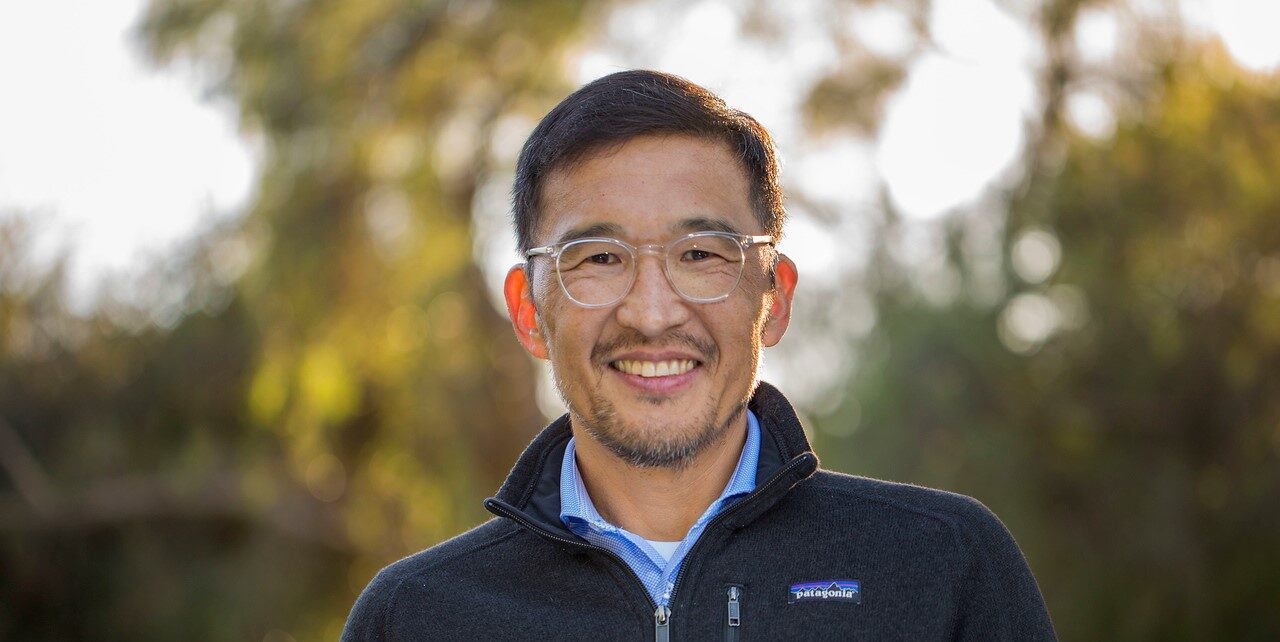
Phil Shin is living proof that Hep B vaccination and early detection can save lives. (Photo courtesy of American Liver Foundation)
This article was provided by our partner, the American Liver Foundation. It has been reviewed by Bionews for accuracy and relevance. The views and opinions expressed are those of the author and do not necessarily reflect the views of Bionews or Liver Disease News.
My mother, Young Ja Shin, came to the United States from Korea in 1969. She carried with her the hope and sacrifice that define the immigrant experience — and something else she did not know she was carrying: hepatitis B.
There were no symptoms, no warnings, no reason to suspect anything was wrong. She simply lived her life, raised her family, and passed along something invisible that would quietly shape my own story decades later.
I was diagnosed with liver cancer in 2018. I was a husband and a father, running marathons and feeling, as best I could tell, perfectly healthy. The diagnosis came like a wall — sudden, solid, and impossible to run around. The cancer, driven by chronic hepatitis B I had carried since birth without knowing it, required immediate surgery. I underwent a liver resection to remove a large tumor. Five months later, it came back.
My doctors told me my only curative option was a liver transplant. My friend Mark made an extraordinary choice: He volunteered to donate 60% of his healthy liver so that I could live. In September 2019, I received that gift.
I have carried it on every run since.
Running has always been part of how I process the world. After my transplant, it became something more: a platform, a practice, a form of ongoing gratitude.
I trained, got cleared, and eventually returned to competing in marathons and ultramarathons. In 2022, Mark and I ran the Boston Marathon together — his first marathon. We made our way from Hopkinton to Boston, the man who gave me part of his liver and the person whose life he saved, sharing 26.2 miles on one of the most storied courses in the world. That image still takes my breath away.
Today I serve on the national board of the American Liver Foundation and the board of the Brave Like Gabe Foundation, a rare cancer organization. I speak at congressional briefings and community events, and I tell my story not because it is extraordinary, but because it is also — in the cruelest sense — preventable.
My mother did not know she had hepatitis B. Neither did I. That is the insidious nature of this disease: It often reveals itself only after it has already caused serious damage. An estimated 2.4 million Americans are living with chronic hepatitis B, and many do not know it. Asian Americans are disproportionately affected, representing up to half of all chronic cases in this country.
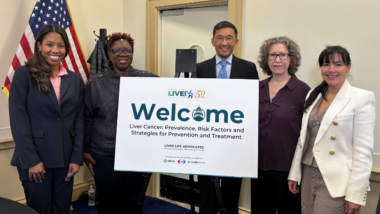
Participants attend ALF’s Liver Cancer Briefing on Jan. 22 in Washington, D.C. (Photo courtesy of American Liver Foundation)
Hepatitis Awareness Month is not just a moment to acknowledge a statistic. It is a call to action for families like mine — families who may be carrying something invisible that can be detected, managed, and in many cases, prevented from advancing to cancer. A blood test can identify hepatitis B. Effective antiviral therapies exist. The tools are there.
This is why I am also deeply troubled by a recent development in public health policy. In December 2025, the CDC panel voted to end the universal recommendation for administering the hepatitis B vaccine at birth — a standard that has been in place since 1991.
That single dose, given within 24 hours of birth, was the most critical window of protection for infants born to mothers like mine. Without it, a baby born to an infected mother faces up to a 90% chance of developing chronic hepatitis B. Since 1991, the birth dose recommendation helped reduce childhood infections by 95% and is estimated to have prevented over 6 million infections and nearly 1 million hospitalizations.
My story did not have to happen. I am afraid, with this reversal, that future versions of my story will.
If you are of Asian descent, or if you or a family member were born in a region where hepatitis B is prevalent, please talk to your doctor about getting tested. Please talk to your pediatrician about vaccination. Not someday. Now.
Every morning, when I catch a glimpse of my 30-inch transplant scar, I am reminded of two things at once. The first is gratitude, for Mark’s sacrifice, for the surgeons who fought for my life, for every mile I have been given since.
The second is purpose. Runners talk about finding their why — the reason that carries you through the miles when everything hurts and quitting would be so much easier. My why is this community. It is every family navigating a diagnosis they did not see coming, every person on a transplant waitlist, every child who deserves a fighting chance that a single vaccine could provide.
That scar is not just a record of what I survived. It is the reason I lace up and show up, mile after mile, for as long as I am able.
Keep going. That is the whole story.
If you’re interested in being a living donor, click here to learn more about the ALF’s Living Donor Network.