
Advocates push for testing during Hepatitis Awareness Month
Emphasis this May is on raising awareness to prevent, treat liver disease
Written by |

May is Hepatitis Awareness Month, and advocates are working to spread the word about viral hepatitis — a group of infections that cause liver inflammation and can lead to deadly consequences, but are almost always preventable, manageable, or curable with appropriate care.
“It’s crucial we highlight Hepatitis Awareness Month in May to raise awareness and educate the public about preventing, screening, and treating hepatitis,” David Frank, the new board chair of the American Liver Foundation (ALF), said in a statement to Liver Disease News.
“We encourage everyone to learn more about the causes and consequences of hepatitis,” Frank said, noting that the ALF provides a wealth of educational resources on its website.

‘That’s why awareness matters; it drives earlier diagnosis’
Hepatitis refers to liver inflammation. This usually occurs due to a viral infection; the most common forms of hepatitis are types A, B, and C. Hepatitis A is spread by contact with fecal matter and usually causes a short-term infection.
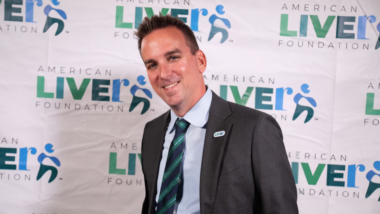
David Frank is the new board chair of the American Liver Foundation.
Hepatitis B and hepatitis C, meanwhile, are spread by contact with bodily fluids, and in some patients cause a chronic or long-lasting infection that can set the stage for life-threatening liver damage. There are also other forms of viral hepatitis, namely types D and E, though these are less common in the U.S.
According to Frank, more than 115,000 new cases of hepatitis A, B, and C are reported in the U.S. each year. Part of what makes these infections such a major public health problem is that hepatitis often doesn’t cause any noticeable symptoms until the disease is at advanced stages, meaning most people who have hepatitis don’t know it until they are already very sick.
“Far too many people are currently living with undiagnosed hepatitis, often because symptoms don’t appear until liver damage has progressed,” Larry R. Holden, president and CEO of the Global Liver Institute, told Liver Disease News in an emailed statement. “That’s why awareness matters; it drives earlier diagnosis, improves access to care, and helps prevent serious complications like cirrhosis [irreversible liver scarring], liver cancer, and even the need for transplant.”

Hepatitis A and B are both preventable via vaccines
Hepatitis A and B are both preventable via vaccines. In most of the world, vaccines for hepatitis B are given at birth because the virus is often passed from mothers to newborns and usually leads to chronic infection in babies.
In the U.S., the Centers for Disease Control and Prevention (CDC) last year pulled its long-standing recommendation for the hepatitis B vaccine at birth, sparking widespread condemnation from medical experts. Despite that controversy, the CDC is still working to spread awareness about hepatitis this month, stating that both hepatitis A and B can be effectively prevented via vaccine.
“Each May during Hepatitis Awareness Month, CDC promotes awareness of the importance of vaccination against hepatitis A and hepatitis B and the importance of testing, early diagnosis, and treatment for hepatitis B and hepatitis C to the public and health care practitioners,” the agency says on its Hepatitis Awareness Month website.
There isn’t a vaccine for hepatitis C, but modern antiviral medications can cure hepatitis C in almost everyone with the infection, the CDC notes.
Awareness must go hand in hand with education, stigma reduction, and action that promotes testing, vaccination, and treatment for life-saving outcomes.
Even though hepatitis is almost always preventable or curable, it remains a major health problem worldwide. That’s why Hepatitis Awareness Month is observed annually to encourage people to get tested for the infection and take steps to prevent transmission.
Collectively, these actions advance the U.S. toward its 2030 goal of eliminating viral hepatitis as a public health concern, mirroring the global strategy set by the World Health Organization.
A highlight of the month is Hepatitis Testing Day, observed on May 19, during which people are encouraged to undergo screening for hepatitis B and C to learn their status and receive appropriate treatment as needed. All adults are advised to get tested at least once, especially those who are more vulnerable or at higher risk.
Individuals are encouraged to help spread the word about Hepatitis Awareness Month and Hepatitis Testing Day by sharing social media graphics and posts using the hashtags #HepatitisAwarenessMonth, #NationalHepatitisTestingDay, and #KnowYourStatus.
“Awareness must go hand in hand with education, stigma reduction, and action that promotes testing, vaccination, and treatment for life-saving outcomes,” Holden said.