
Project gives PFIC families a voice in liver treatment research
Collaboration develops tools for patient-centered options
Written by |
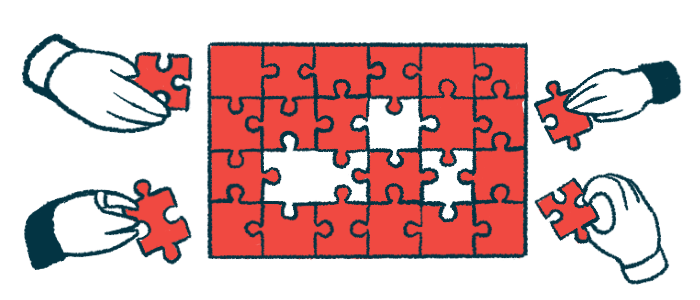
People with progressive familial intrahepatic cholestasis (PFIC), along with their families and clinicians, collaborated on a two-year project to develop a knowledge base for patient-centered care and strategies for sustainable patient-researcher partnerships, producing two new resources.
The project, called IMPACT, led to the development of the Treatment Experience App (TEA), a web-based platform to help understand treatment options, and the IMPACT Roadmap, a guide for patient-researcher collaborations. The researchers said the roadmap offers a model other rare-disease communities can adapt to their needs.
“Project IMPACT was launched to provide the PFIC community with the necessary knowledge, and to create the necessary tools, to systemize treatment information and to establish a motivated base of patient families, clinicians, and researchers to enable future patient-centered [research] in PFIC,” the researchers wrote. They described the project in a study, “Identifying patient-centered outcomes in progressive familial intrahepatic cholestasis: Results from IMPACT,” published in the Journal of Gastroenterology and Hepatology.
PFIC is a group of rare liver disorders typically manifesting in infancy or early childhood. They are caused by genetic mutations that impair the liver’s ability to properly secrete bile, a digestive fluid. This causes bile to build up to toxic levels in the liver, leading to progressive liver damage and often liver failure.
Because there are no definitive medical treatments, care typically begins with managing cholestasis symptoms such as severe itching (pruritus), and may progress to surgical procedures, including biliary diversion (surgery to reroute bile flow) or liver transplant. Clinical guidelines are limited and based mainly on expert opinion rather than high-quality evidence, leaving families dependent on individual providers to make complex treatment decisions.

Grant enables collaboration
The project grew out of an April 2022 meeting led by the PFIC Network, a caregiver-founded patient advocacy organization, at which caregivers described feeling uninformed about their treatment options and unsure how to engage with medical teams.
This highlighted the need for patient-centered comparative effectiveness research (CER), a strategy to help patients and caregivers make more informed healthcare decisions by comparing different treatment approaches based on outcomes that matter to them. The network launched IMPACT, funded by an award from the Patient-Centered Outcomes Research Institute (PCORI).
The researchers adapted six PFIC-focused learning and feedback modules from PCORI’s Research Fundamentals course, a free, online training program designed to help patients, caregivers, and others understand the language and processes of medical science research.
Modules were available in two versions: one for patients, parents, and caregivers, and one for clinicians and researchers. They were self-guided and took 15 to 20 minutes each to complete. Modules were released one at a time over two years and were accessible through the network’s website and email list. Twelve focus groups, two of which were in person, helped organizers refine the project.
Learning module participation ranged from 16 to 31 patients and families and three to eight clinicians or researchers per module. Focus groups drew seven to 35 patients and families and three to 35 clinicians or researchers, with the two in-person groups having notably higher attendance. Nearly all patient perspectives were represented by parents and caregivers.

Project leads to ‘shared understanding’
The study detailed the project’s two main tools.
The web-based TEA platform organizes information into three PFIC treatment paths: medications, surgical interventions, and vitamins and nutrition.
For each treatment, TEA provides a plain-language overview of how the therapy works, drawn from published research and reviewed by medical experts. There’s also a community experiences section, where patients and families can share and read about real-world benefits, challenges, and effects on quality of life.
The IMPACT Roadmap is a manual organized into three sections. The first covers engagement guidance, including how to identify barriers to patient-researcher partnerships, form research teams, and develop communication strategies. Participants preferred updates delivered through email, social media, and websites over printed mail or academic publications.
The second section outlines future directions for PFIC patient-centered CER, with guiding principles for future research, strategies to facilitate patient and family participation in studies, and a community-generated list of priority research questions organized by treatment class.
The third section addresses sustainability, emphasizing broad public access to the TEA and the roadmap so that lessons learned can be advanced by PN and potentially by other rare disease communities.
The project demonstrated consistent improvement in engagement across all measured domains, as indicated by the Patient Engagement Evaluation Tool (PEET), a validated instrument that assesses participants’ sense of involvement in the research process.
Participants reported notable gains in feeling heard, having an equal opportunity to contribute, and receiving relevant information before meetings. The researchers attributed these improvements to changes made in response to constructive feedback collected through the PEET throughout the project.
“IMPACT successfully engaged key stakeholders from the PFIC community to build shared understanding of patient-centered CER, define PFIC-specific CER targets, and develop strategies for equitable and sustainable patient-researcher partnerships,” the researchers concluded.


Leave a comment
Fill in the required fields to post. Your email address will not be published.