
I’m grateful to make connections with the rare disease community
Sharing my son Finley's story has had positive results
Written by |

Being thrust into the world of rare diseases has been interesting. If you don’t have a personal connection to rare diseases, it’s easy to feel disconnected and think of that world as foreign and scary. But since my son Finley was born with Alagille syndrome, I have learned just how connected this community is to the rest of society — even if most people don’t realize it.
When Finley was diagnosed, I had never heard of Alagille syndrome, which affects an estimated 1 in 30,000 to 50,000 live births. Because it’s rare, most people I talk to have never heard of it either. The only person I’ve met who knew of it had worked in a hospital.
Because people generally aren’t aware of the condition, I have formulated an “elevator pitch” to help explain what it means for Finley, who’s now 5. This has been a helpful tool that has led to some interesting conversations and neat results.

The benefits of sharing our story
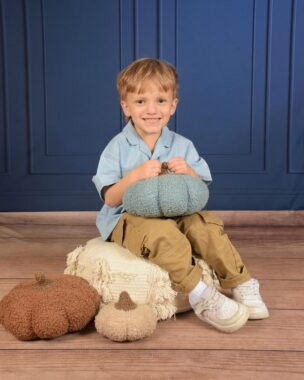
Finley was all smiles for pre-K picture day. (Courtesy of Jay Sandstrom)
Hearing about others’ experiences has been one of the best parts of sharing Finley’s diagnosis. The more I share, the more I learn about the stigmas surrounding medical complications, but talking about Finley’s story helps others feel more comfortable sharing their own.
I am not always the most outgoing person and tend to be more introverted. But connecting with people in the rare disease world has empowered me. If sharing my child’s story helps someone else feel less alone, then that is a major victory.
I make a point of not avoiding the heavy parts of my own journey as a parent and caregiver. The early days of Finley’s life were extremely difficult for me. I was so stressed and worried during his two weeks in the neonatal intensive care unit that I dropped about 10 pounds. This all took place during the height of the COVID-19 pandemic, so nothing was normal.
I want to demonstrate that while, yes, it’s crucial to pour into your kids, parents also need to take care of themselves. Back in those early days, I was barely able to do so. It took me a long time to figure it out.
I am thankful that I’ve been able to connect with so many people about rare diseases and medical complexities. Having the opportunity to help reduce the stigma is important to me. Writing this column has been a big part of that.
Note: Liver Disease News is strictly a news and information website about the disease. It does not provide medical advice, diagnosis, or treatment. This content is not intended to be a substitute for professional medical advice, diagnosis, or treatment. Always seek the advice of your physician or other qualified health provider with any questions you may have regarding a medical condition. Never disregard professional medical advice or delay in seeking it because of something you have read on this website. The opinions expressed in this column are not those of Liver Disease News or its parent company, Bionews, and are intended to spark discussion about issues pertaining to liver disease.
Leave a comment
Fill in the required fields to post. Your email address will not be published.