
A whiff of dish soap brings back memories — and medical trauma
Washing dishes unexpectedly transported me back to the NICU
Written by |

Our brains work in fascinating ways. One moment, you are in the middle of a completely mundane task, and suddenly, you are whisked back in time.
This happened to me during a recent weekend getaway with my family. I was washing some dishes in our hotel kitchen when, suddenly, I was transported back to memories of washing bottles and breast pump parts in the neonatal intensive care unit, where my youngest son, Finley, had to stay for two weeks following his premature birth. It was the same soap the hospital had provided us. The smell immediately brought me back to hospital rooms, medical uncertainty, and learning about Alagille syndrome for the first time.
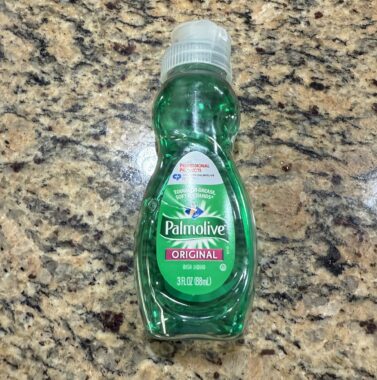
The soap that brought back all the old memories. (Photo by Jay Sandstrom)
Raising a child with a rare genetic condition brings medical trauma for both the child and his caregivers. While Finley, who turns 5 this month, may not yet fully grasp what having Alagille syndrome means for him, my wife, Dani, and I have been working to plant the seeds of understanding. We explain what his doctor visits are for, why he needs to have blood drawn regularly, and what each of his medications does — all in terms he can comprehend. I know more difficult conversations are coming, but for now, he has a good basic understanding of his liver disease.
It took me a while to realize how much medical trauma I’d experienced early in Finley’s life and how much it affected me. When my wife and I had our older son, Jackson, the pregnancy and birth went about as smoothly as you could ask for. He was born just a few hours past his due date, with no complications. So when we decided to have another child, we thought we were ready. We had been there and done that. It turned out that life was going to throw us a curveball.

The entire pregnancy was full of complications. We faced one thing after another, but each concern either resolved on its own or became a non-issue. Then, Finley decided to arrive almost one month early. It was a hectic day, especially since strict COVID-19 protocols were still in place. All of a sudden, 12 nurses were frantically working to deliver our baby.
Thankfully, both mom and baby were OK. We were able to enjoy some time together in the delivery room before Finley was transported to the NICU.
Those days of uncertainty while we awaited answers in the NICU were some of the hardest of my life. Little did we know the real answer — his Alagille syndrome diagnosis — wouldn’t come for several months.
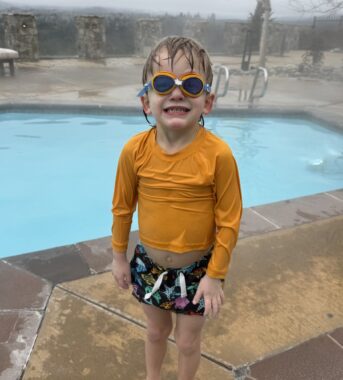
Finley has a ball swimming in the outdoor pool in the mountains. (Photo by Jay Sandstrom)
So, for two weeks, I sat in that hospital room, washing bottles and breast pump parts in the sink so my wife could rest and recover. I’d then go home in the evenings to be with Jackson, who was spending the days with my mom. It was a challenging time for him; at 3 years old, he couldn’t understand why Mom and Dad weren’t home like usual.
Fast forward to our family’s recent long weekend getaway at a mountain lodge. It has become one of our favorite spots, as the rooms have kitchens where we can cook, so we don’t have to eat out for every meal. The kids love swimming, sledding, and exploring the grounds. But for a brief moment, while doing dishes, I was transported to one of the worst times of my life, when I was supposed to be having one of the best. I had to take a moment to breathe, relax, and reset.
I am working on navigating my own medical trauma. I know it will be an ongoing process, but it’s necessary so I can be there for Finley.
Note: Liver Disease News is strictly a news and information website about the disease. It does not provide medical advice, diagnosis, or treatment. This content is not intended to be a substitute for professional medical advice, diagnosis, or treatment. Always seek the advice of your physician or other qualified health provider with any questions you may have regarding a medical condition. Never disregard professional medical advice or delay in seeking it because of something you have read on this website. The opinions expressed in this column are not those of Liver Disease News or its parent company, Bionews, and are intended to spark discussion about issues pertaining to liver disease.


Leave a comment
Fill in the required fields to post. Your email address will not be published.