It’s not just fatty liver
Weight bias and missed symptoms delayed her liver disease diagnosis
Written by |
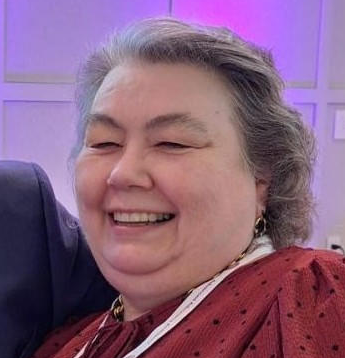
Dianne Gillard advocates for better education, resources, and awareness of fatty liver disease. (Courtesy of Global Liver Institute)
This article was provided by our partner, Global Liver Institute. It has been reviewed by Bionews for accuracy and relevance. The views and opinions expressed are those of the author and do not necessarily reflect the views of Bionews or Liver Disease News.
If you had asked me years ago to describe myself, I would have said I was someone who just got on with things. I’ve always put everyone else first. My parents became disabled when I was young, so by age 11, I had already taken on a caregiving role. Later, I became a wife, a mother, and eventually a carer for several family members.
Yet, I never thought I was neglecting myself because I didn’t realize anything serious was wrong. For years, I was constantly tired, in pain, and dealing with unexplained swelling. Because these symptoms developed slowly, I normalized them. I thought, “If I can’t do anything about it, why worry?” It turns out they were linked to my liver all along.
Fatty liver disease is often called a silent disease because its symptoms are vague and easy to dismiss.
Looking back
One of the hardest parts is knowing how many warning signs were missed. Many of my symptoms were blamed solely on my weight. When I saw my general practitioner about my swollen leg, I was advised to lose weight and given information about Weight Watchers.
What hurt most was feeling reduced to “a fat person who needs to lose weight.” Years later, I learned that swollen legs can be a symptom of fatty liver disease. When I eventually gained access to my medical records, I discovered earlier scans had already shown signs of the disease, yet there was no proper follow-up or investigation.
I often wonder what might have happened if someone had taken those findings seriously sooner. In 2013, the disease may still have been reversible. Instead, by the time I finally received the correct diagnosis, I had stage 4 disease with cirrhosis.
Another challenge has been confronting the stigma surrounding liver disease. I once believed liver disease mainly affected people who drank too much alcohol. I don’t drink, yet I found myself repeatedly saying “non-alcoholic fatty liver disease” to distance myself from those assumptions. In doing so, I realized I had stigmatized myself.
I’ve lost count of how many times I’ve heard someone say, “Oh, it’s just fatty liver.” But it is not “just fatty liver.” People don’t realize how serious it can become or how many people are living with it unknowingly.
We need better awareness and earlier screening. In the U.K., women are routinely invited for smear tests beginning at a young age. I believe liver disease screening should become more routine as well, because the early symptoms can be difficult to recognize.
Things finally changed when I was referred to a hepatologist, who connected me with Saima Ajaz, PhD, MD, at King’s College Hospital. After years of feeling dismissed, I finally felt I had a doctor who genuinely cared and wanted to help.
While liver disease is daunting, finding the right care team shifted my perspective. Engaging in clinical trials and advocacy, including a visit to Capitol Hill through the Global Liver Institute’s Advanced Advocacy Academy, restored my sense of purpose.
Now, I want healthcare professionals, policymakers, and the public to take fatty liver disease seriously. It is not “only fatty liver.” And for anyone living with this condition, my advice is simple: make the lifestyle changes you need to make. Depending on the stage of diagnosis, you may still have the opportunity to repair your liver or stop the disease from progressing.
I wish I could tell my younger self one thing: Think of yourself, too. Because if you don’t look after yourself, how can you continue looking after the people you love? Sometimes, you need to learn to be a little bit selfish.
I speak openly about my experience because I do not want others to go through what I did. Too many people are living with fatty liver disease without knowing it, and too many are made to feel ashamed before they are properly listened to. I spent years believing my symptoms were simply things I had to live with. I blamed myself for much of it because that is what society teaches people with obesity to do. But healthcare is supposed to look beyond assumptions. It is supposed to see the whole person.
That is why awareness, early screening, and compassion matter. I cannot change the fact that my disease was caught at stage 4 instead of stage 1, but I can use my voice to help others feel seen sooner.
If there is one thing I hope people take away from my story, it is this: fatty liver disease is not “just fatty liver.” It is serious, it is growing, and it deserves to be treated that way.
Looking after yourself is not selfish. In fact, sometimes it is the most important thing you can do, both for yourself and for the people you love.